(246) 829-8400


Beginner guide: How can I practise driving?
This guide covers practical, effective ways to use your supervised practice time, along with answers to some of the questions new drivers ask most often.
Passing the Regulation Examination and getting a Learner's Permit is only the first step toward driving safely and confidently in Barbados. What comes next, supervised practice on public roads, is where the real skill-building happens.
Learners are legally required to hold their permit for a minimum of three months before applying for the practical test, which leaves plenty of time to build genuine road-readiness, not just the minimum needed to pass. This guide covers practical, effective ways to use that time, along with answers to some of the questions new drivers ask most often.
Quick Facts
- Learner drivers must comply with the conditions of their Learner's Permit.
- Driving with an experienced supervisor can help build confidence and road awareness.
- Roundabouts are a key part of driving in Barbados and require practice.
- Consistent practice is often more effective than occasional long sessions.
- Every vehicle driven on public roads must be properly insured.
Practising safe driving: 5 tips
Here are five tips for practising safe driving.
1. Practise with a fully licensed supervisor
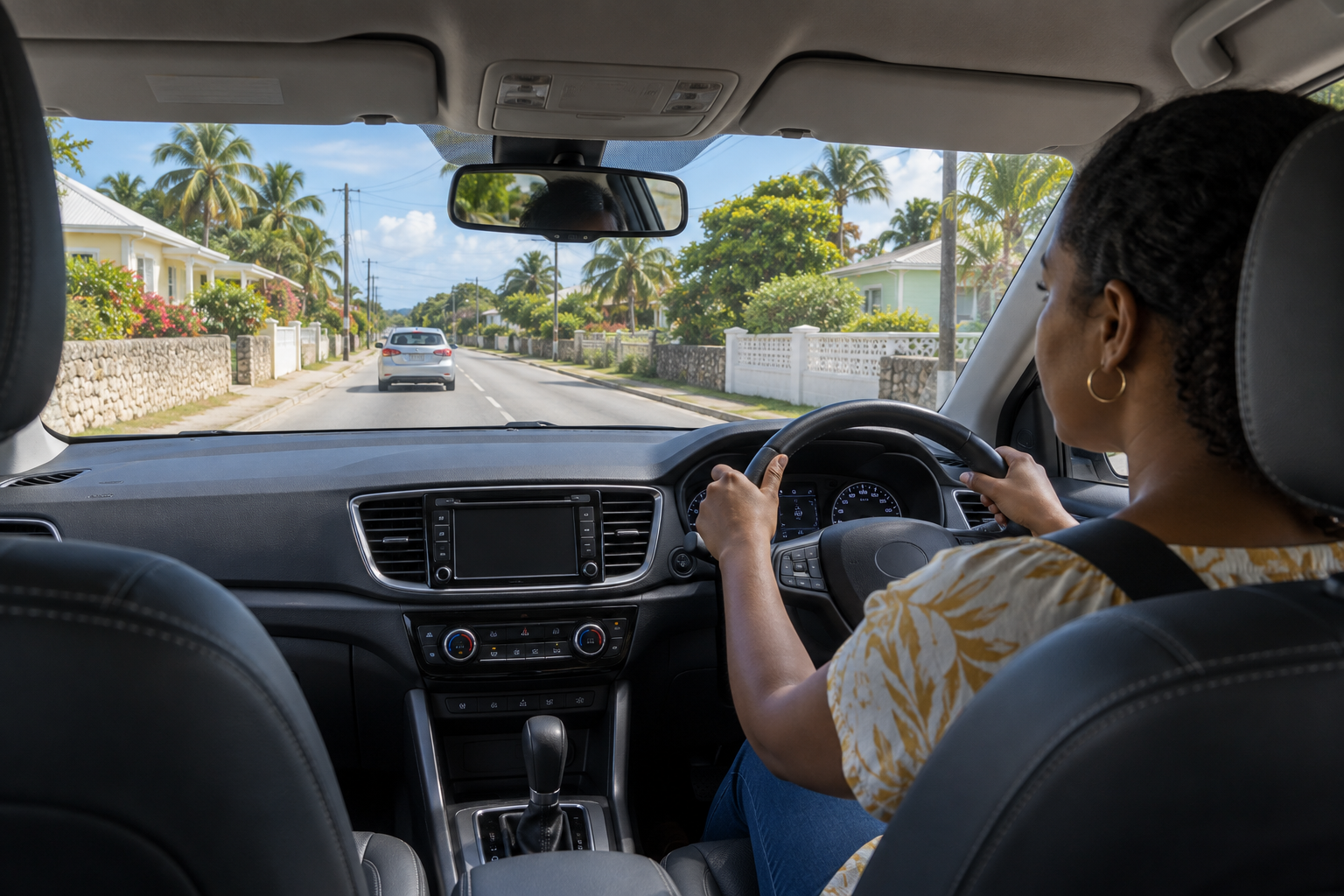
Learner drivers must be accompanied by a suitably licensed driver whenever driving under a Learner's Permit. Treat this as an asset, not a restriction. A patient, experienced supervisor, whether a family member, friend, or qualified instructor, can talk you through decisions in real time, point out hazards before they become problems, and give feedback you would not get driving alone.
Choose someone calm under pressure where possible. A supervisor who reacts sharply to small mistakes tends to make new drivers more anxious rather than less, and anxious driving is usually more hesitant or erratic, not safer.
2. Start in a low-traffic environment
Basic car control, such as steering, braking, and manoeuvring at low speed, is easier to learn without the added pressure of other traffic. Empty car parks, which tend to be quieter early on Sunday mornings, and quiet residential streets are good starting points.
Once turning, stopping, and reversing feel natural, you're ready to add real traffic conditions. Trying to learn basic control and cope with traffic at the same time slows progress and adds unnecessary stress in the early stages.
3. Add complexity gradually
Once the basics feel comfortable, build up in stages instead of jumping straight to busy roads. A sensible progression is quiet streets, then junctions, then roundabouts, which are common on Barbados's main routes and require giving way to traffic already on the roundabout, and finally busier roads once each earlier stage feels manageable.
Working through this sequence at your own pace, instead of a fixed timeline, means each new challenge builds on skills you've already practised, so confidence grows alongside ability instead of lagging behind it.
4. Know the rules before you drive
Studying the Barbados Highway Code, which you'll already have covered to pass the Regulation Examination, is not just exam preparation. Understanding road signs, right of way, and speed limits in advance means fewer surprises once you're behind the wheel.
Knowing what to expect at a junction or roundabout before you reach one lets you focus on handling the car rather than working out the rules on the spot, which makes the whole experience considerably less stressful.
5. Practise often, in short sessions
Frequent, shorter practice sessions tend to build skill and confidence more effectively than occasional long ones. Many instructors recommend accumulating a substantial amount of supervised practice before attempting the practical test. Consistent practice across different road and weather conditions often helps develop confidence and safer driving habits.
Spreading that time across regular short sessions (over a handful of long ones) keeps skills fresh and gives you more chances to practise in different conditions, from daylight to dusk and dry roads to wet ones, which the practical test may include.
Drive with confidence
Nerves in the first few weeks of driving are normal, and they tend to ease with the kind of steady, supervised practice covered above. To add to your confidence on the road, ensure you have the correct insurance coverage.
Every vehicle on Barbados's public roads must be insured, including those driven by learners. GenAc offers private motor insurance built around local needs, with the option to add a learner or new driver to an existing policy. Get a quick online quote to see your options.
Drive with confidence
GenAc offers private motor insurance built around local needs, with the option to add a learner or new driver to an existing policy.
Get a Quick Quote5 Practice Tips
Quick Reminders
- Comply with your Learner's Permit conditions.
- Choose a calm, patient supervisor.
- Build confidence at your own pace.
- Study the Barbados Highway Code.
- Ensure the vehicle is properly insured.
Frequently Asked Questions
What is the best way to practise driving?
Consistent, supervised practice that starts in a low-traffic setting and gradually adds complexity is generally the most effective approach. It's also what Barbados law requires while you hold a Learner's Permit, since a fully licensed driver must be with you at all times.
How can I practise driving at home?
You cannot legally drive on Barbados's public roads without a Learner's Permit and a supervisor, but useful preparation can happen before you're behind the wheel. Studying the Highway Code, watching instructional driving videos, and paying attention as a passenger to how experienced drivers handle junctions and roundabouts all help, as does sitting in a parked car to get familiar with the pedals, mirrors, and controls.
How do I overcome my fear of driving?
Some nervousness is normal for new drivers. Starting with short, low-pressure sessions, practising regularly, and driving with a calm, patient supervisor all help build confidence over time. Knowing the rules in advance also reduces surprises on the road, which eases anxiety as much as the driving itself does. If nerves feel severe or persistent, additional support from a qualified driving instructor can help.
What are the 5 F's of driving?
There's no single official definition, but "the 5 F's" commonly refers to a pre-drive vehicle check taught by driving instructors more broadly:
- Flats: tyre condition and pressure
- Fluids: checking for leaks
- Fractures: cracks in glass, lights, or bodywork
- Filth: dirty windows or lights that limit visibility
- Freedom: making sure the space around the car is clear before moving off
Drive with confidence
Every vehicle on Barbados's public roads must be insured, including those driven by learners. Get a quick online quote to see your options.
Get a Quick Quote